10,000 Malicious GitHub Repos: What Developers Must Know
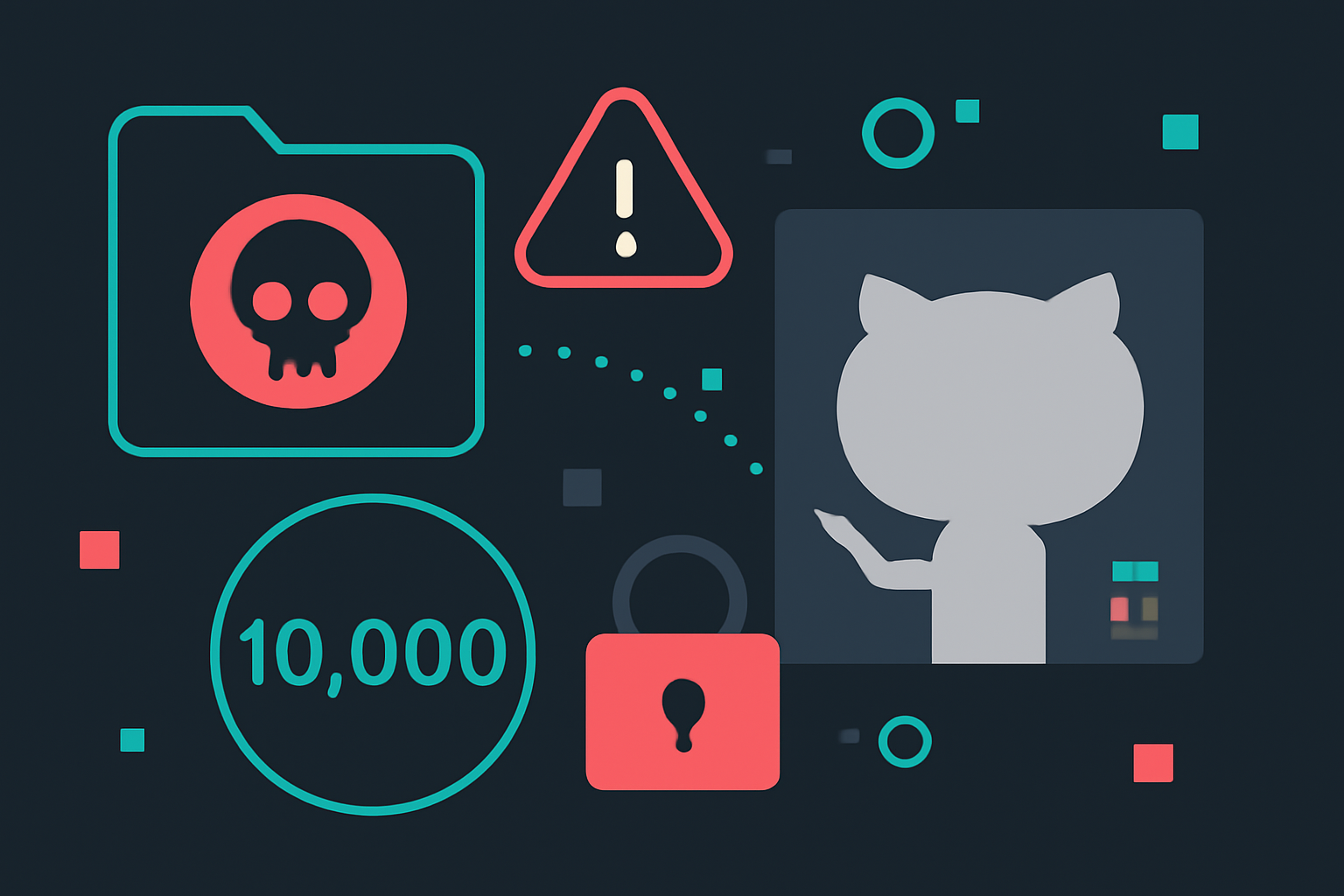
A recent investigation uncovered more than 10,000 GitHub repositories quietly distributing Trojan malware — and most developers walking past them had no idea. If you pull dependencies from GitHub, clone starter templates, or use open-source packages in your daily workflow, this story deserves your full attention.
What Actually Happened
Researchers identified a large-scale campaign where threat actors created convincing GitHub repositories mimicking popular libraries, developer tools, and project templates. These repos weren't obvious fakes. They had stars, forks, realistic README files, and in some cases, commit histories designed to look legitimate. Hidden inside was Trojan malware that could execute silently on a developer's machine during installation or build steps.
This isn't a fringe exploit. It's a well-organized supply chain attack targeting the trust developers place in the open-source ecosystem.
Why GitHub Is Such an Attractive Target
GitHub hosts over 330 million repositories. Developers are conditioned to trust it. When you search for a utility package or a boilerplate project, your guard is lower than it would be downloading a random executable from an unknown website. Attackers exploit exactly that psychological gap.
The tactics being used include:
- Typosquatting — naming repos with slight misspellings of popular projects (e.g.,
reqestsinstead ofrequests) - Star farming — using bot networks to artificially inflate star counts and create social proof
- Forking and poisoning — forking legitimate repos and injecting malicious code into a branch that looks minor or harmless
- Malicious CI scripts — hiding payloads inside GitHub Actions workflows or install scripts that run post-clone
The Supply Chain Risk Is Real and Growing
The SolarWinds breach, the XZ Utils backdoor, and now this campaign all point to the same uncomfortable truth: the software supply chain is a primary attack surface in 2024 and beyond. Developers are the entry point. Once malware lands on a developer's machine, it can harvest credentials, exfiltrate API keys, pivot into internal infrastructure, or quietly sit dormant waiting for the right moment.
For teams building with AI APIs — managing keys for OpenAI, Anthropic, Google Gemini, DeepSeek, or other models — a compromised development environment is particularly dangerous. API keys stored in .env files, shell histories, or config directories are prime targets. A single infected dependency could expose credentials that rack up thousands of dollars in unauthorized usage or leak sensitive data sent through your prompts.
This is one reason why using a centralized API gateway like KodaAPI makes sense from a security standpoint. Instead of scattering individual vendor API keys across multiple projects, environments, and developer machines, you manage one key. If something goes wrong, rotating one credential is far simpler than hunting down which of your five AI provider keys was compromised.
How to Protect Yourself Right Now
Here are concrete steps every developer and engineering team should take:
Audit What You're Cloning
- Always check the repository owner. Is it the official organization or an individual with a suspiciously similar name?
- Look at the commit history. Repos with a sudden burst of polished commits after months of silence are a red flag.
- Cross-reference the package name against the official registry (npm, PyPI, etc.) before using it.
Lock Your Dependencies
- Use lockfiles (
package-lock.json,poetry.lock,Cargo.lock) and commit them to version control. - Pin specific versions and validate checksums where possible.
- Tools like
socket.dev, Snyk, or Dependabot can flag suspicious packages before they hit your build.
Sandbox Your Build Environment
- Run builds in isolated containers or VMs, not directly on your main development machine.
- Never run unfamiliar install scripts with elevated privileges without reading them first.
Rotate Credentials After Any Suspected Exposure
- Treat any period of uncertainty as a potential compromise.
- Use short-lived tokens wherever platforms support them.
- Store secrets in a dedicated secrets manager, not in plaintext files.
Enable GitHub's Security Features
- Turn on secret scanning and push protection in your own repositories.
- Review third-party GitHub Actions you depend on — many attacks now target the CI layer specifically.
The Bigger Picture
Open source is still one of the greatest forces for good in software development. The answer to these attacks isn't to stop trusting the ecosystem — it's to build better habits and tooling that make trust earned rather than assumed. Staying informed, moving deliberately, and maintaining hygiene around credentials and dependencies goes a long way.
The attackers are organized and patient. Developers need to be just as methodical.
Inspired by orchidfiles.com